

The cost of living in the UAE is one of the most discussed topics among expatriates, investors, and entrepreneurs planning to move to Dubai, Abu Dhabi, or other Emirates. With its luxurious lifestyle, tax-free income, and world-class infrastructure, the UAE attracts millions of residents from across the globe. But while opportunities are abundant, the cost of living can vary significantly depending on your lifestyle, city of residence, and family size.
While Dubai often steals the spotlight with its glittering skyline and luxury lifestyle, Abu Dhabi and Sharjah present compelling alternatives that might better suit your budget and lifestyle preferences. Understanding the cost differences between these three major cities isn’t just about numbers—it’s about making an informed decision that aligns with your financial goals and quality of life expectations.

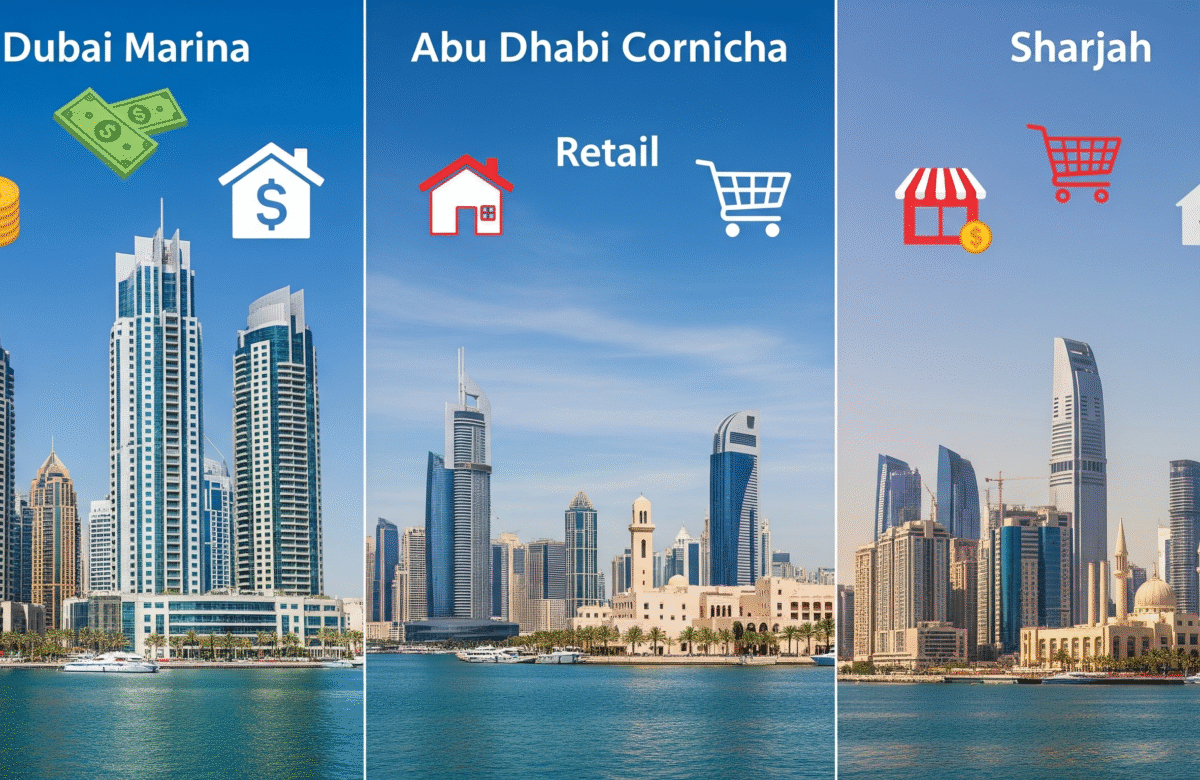
Housing Costs: A Major Factor
Dubai: Premium Living, Premium Prices
Dubai, known for its luxurious skyscrapers and cosmopolitan vibe, has the highest rental and property prices in the UAE. A one-bedroom apartment in central areas like Downtown Dubai or Dubai Marina can cost between AED 80,000 and AED 120,000 annually. Buying property is also expensive, with average prices per square foot in prime areas hovering around AED 1,500–2,000. Dubai’s appeal lies in its world-class amenities, but this comes at a premium.
Abu Dhabi: Balanced and Family-Friendly
Abu Dhabi, the UAE’s capital, offers slightly more affordable housing options. A one-bedroom apartment in central areas like Al Reem Island or Khalifa City ranges from AED 60,000 to AED 90,000 per year. Property purchase prices are also lower, averaging AED 1,200–1,600 per square foot. Abu Dhabi’s focus on family-oriented communities and green spaces makes it attractive for those seeking a quieter lifestyle.
Sharjah: Budget-Friendly Option
Sharjah is the most affordable of the three, with one-bedroom apartments in decent areas like Al Nahda or Al Majaz costing AED 25,000–40,000 annually. Property prices are also lower, around AED 800–1,200 per square foot. While Sharjah lacks the glitz of Dubai or Abu Dhabi’s grandeur, its proximity to both cities makes it a practical choice for budget-conscious residents.
Transportation: Getting Around
Dubai: Extensive but Pricey
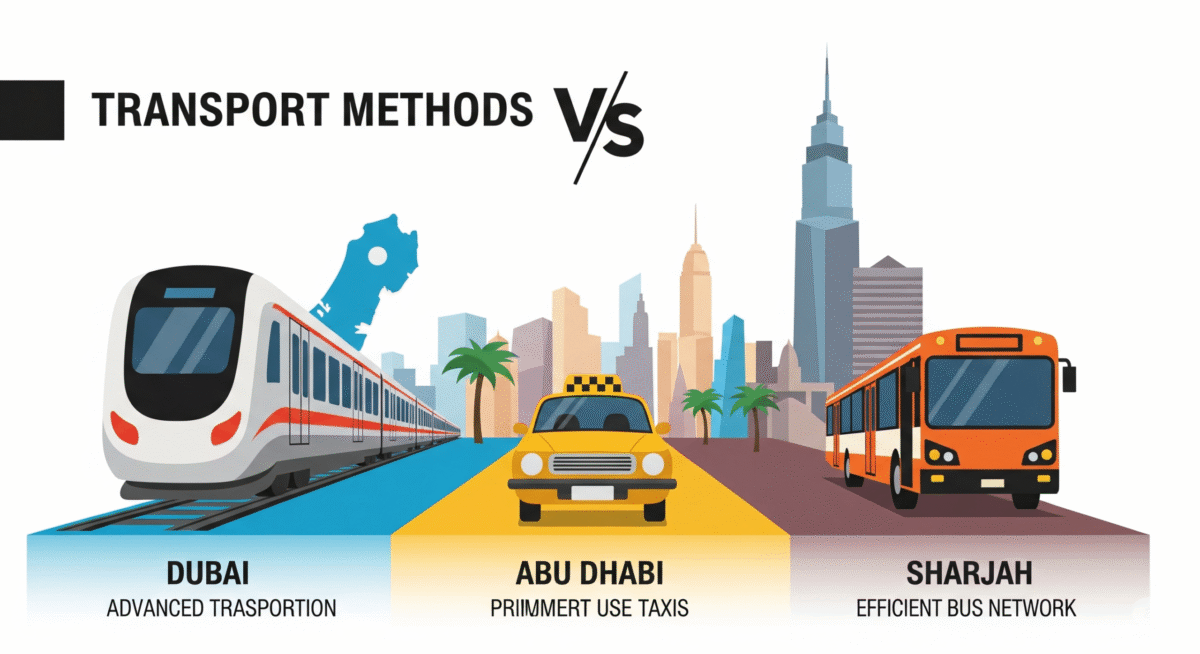
Dubai’s metro, taxis, and ride-hailing services like Careem are widely used. A monthly metro pass costs around AED 350, while frequent taxi users might spend AED 500–800 monthly. Owning a car involves fuel (around AED 3 per liter), insurance (AED 2,000–4,000 annually), and parking fees, especially in central areas. Dubai’s sprawling layout often necessitates a car for convenience.
Abu Dhabi: Efficient and Affordable
Abu Dhabi’s public transport is more limited, with buses being the primary option (monthly pass: AED 80–100). Taxis are cheaper than in Dubai, with monthly costs around AED 300–500. Car ownership expenses are similar to Dubai, but free parking in many residential areas reduces costs. Abu Dhabi’s compact layout makes commuting easier.
Sharjah: Economical and Accessible
Sharjah’s bus system connects to Dubai and Abu Dhabi, with fares as low as AED 5–10 per trip. Taxis are affordable, with monthly costs around AED 200–400. Car ownership is the cheapest here, with lower parking fees and similar fuel costs. Sharjah’s proximity to Dubai allows commuters to balance cost and convenience.
Education: Investing in the Future
Dubai: High-Quality, High-Cost
Dubai hosts top-tier international schools with fees ranging from AED 40,000 to AED 100,000 per year, depending on the curriculum (British, American, IB). Additional costs like uniforms and extracurricular activities can add AED 5,000–10,000 annually. Dubai’s diverse schooling options cater to expats but come at a premium.
Abu Dhabi: Competitive but Slightly Cheaper
Abu Dhabi’s international schools charge AED 30,000–80,000 annually. The emirate has fewer schools than Dubai, but quality remains high, with curricula like British and IB widely available. Additional costs are similar to Dubai, though some schools offer discounts for siblings.
Sharjah: Affordable Education
Sharjah’s schools are significantly cheaper, with fees ranging from AED 15,000 to AED 50,000 per year. While the emirate has fewer international schools, options like Indian and British curricula are available, making it ideal for families prioritizing affordability.
Healthcare and Education: Essential Services Investment
Dubai: Premium Healthcare and International Schools
Dubai offers world-class healthcare with costs to match. Health insurance is mandatory, with basic coverage starting at AED 600-1,200 annually per person. Premium plans can exceed AED 5,000 annually. Private consultation fees range from AED 200-500.
International schools in Dubai are among the world’s most expensive, with annual fees ranging from AED 20,000 for basic schools to AED 100,000+ for premium institutions. The quality is generally excellent, but costs are substantial for families.
Abu Dhabi: Quality Services at Better Value
Abu Dhabi provides excellent healthcare value, with mandatory health insurance costing AED 500-1,000 annually per person for basic coverage. The government’s SEHA network offers affordable healthcare options alongside private facilities.
School fees are generally 15-25% lower than Dubai, with quality international schools available from AED 15,000-70,000 annually. The city’s education sector offers good value without compromising quality.
Sharjah: Affordable Excellence
Sharjah offers the most affordable healthcare and education options. Health insurance costs are lower, starting at AED 400-800 annually per person, with government hospitals providing subsidized care.
International schools in Sharjah provide excellent value, with fees ranging from AED 8,000-40,000 annually. Many families choose Sharjah schools even when living in other emirates due to the cost savings and quality education.



)